
How to Clean a Sofa: A Step-by-Step Guide for Every Fabric
Learn how to clean a sofa safely at home. Follow our step-by-step UK guide covering care label codes, stain removal, and fabric care for every material.
Table of Contents
How to Clean a Sofa
Cleaning a sofa safely at home starts with identifying your upholstery material and checking the manufacturer’s care label. Whether you are dealing with everyday dust, stubborn food spills, or lingering pet odours, applying the wrong cleaning product or using too much moisture can cause permanent watermarks, fabric shrinkage, or dye transfer.
This guide walks you through the correct step-by-step cleaning process for every major sofa fabric, helping you refresh your living space without risking costly damage.
Before You Clean Your Sofa, Check the Care Label
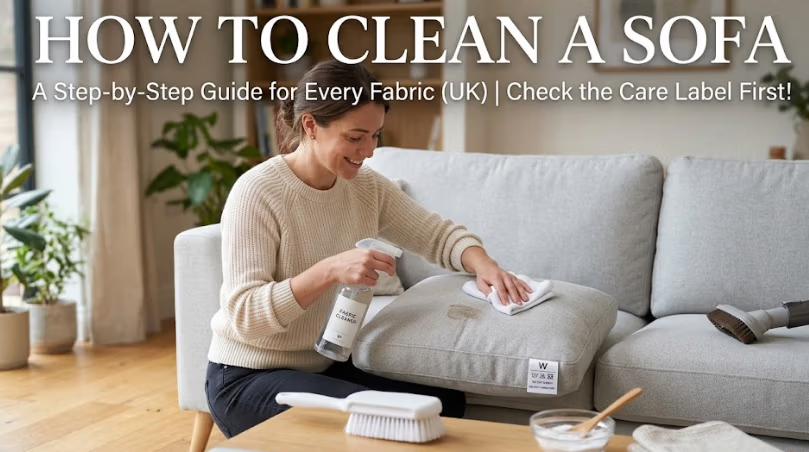
Never apply water, household cleaning solutions, or solvents to your sofa without checking its tag first. Manufacturers use standard cleaning codes to indicate which products are safe for your specific fabric:
- W (Water-based): Water-based cleaning products, light detergents, or steam may be used safely.
- S (Solvent-based): Use solvent-based cleaners only. Water can stain, bleed dyes, or ruin the fabric structure.
- WS or W/S: Both water-based and solvent-based cleaning methods are permitted, subject to specific manufacturer instructions.
- X (Vacuum/Dry-clean only): Vacuuming or professional low-moisture methods only. Do not apply water, foams, or liquid solvents.
Always perform a spot test on a small, hidden area (such as the back panel or underneath the base frame) before treating visible cushions or arms. Allow the test area to dry completely so you can inspect for colour fading, rings, or texture changes.
What You Need to Clean a Sofa
Gathering the right tools before you begin protects your upholstery from accidental damage and makes the process far smoother:
- Vacuum cleaner with a soft upholstery brush attachment and a narrow crevice tool.
- Soft-bristled upholstery brush (for durable woven fabrics or lifting dust).
- Clean, light-coloured microfibre cloths (using white or pale cloths prevents dye transfer onto your sofa).
- Mild upholstery shampoo or fabric-safe detergent (only where permitted by the care code).
- Warm water (only for water-safe materials).
- Baking soda or cornstarch (for absorbing grease or neutralising light odours).
How to Clean a Sofa Step by Step
Follow this practical, numbered procedure to refresh your sofa without damaging its fabric or internal padding:
- Check the care label: Locate the tag under the cushions or frame to confirm whether your sofa accepts water-based or solvent cleaners.
- Clear loose items: Remove scatter cushions, throws, and loose seat pads.
- Vacuum thoroughly: Use your vacuum’s crevice tool to clear crumbs, dust, and pet hair trapped deep inside seams, folds, and underneath base cushions.
- Treat specific stains first: Identify individual marks and apply an appropriate, fabric-safe spot cleaner sparingly.
- Apply cleaning solutions carefully: Dampen your microfibre cloth with the approved cleaner rather than pouring or spraying liquids directly onto the upholstery.
- Blot, do not scrub: Gently blot stains from the outer edge inward to lift dirt without fraying fibres or spreading the mark.
- Rinse soap residue: Wipe treated areas with a clean, damp cloth (where water is permitted) to remove soap residue that might otherwise attract fresh dirt.
- Allow to dry completely: Open windows or use room fans to circulate air. Ensure the sofa dries 100% before replacing cushions or sitting on it.
- Restore fabric texture: Once dry, use a soft brush to restore the nap on velvet, microfibre, or suede if the fabric permits.
How to Clean Different Types of Sofa Fabric
Different materials demand completely different handling. Fabric composition, dyes, finishes, and construction determine how your upholstery reacts to moisture and heat.
Cotton and Linen Sofas
Natural woven fabrics absorb moisture quickly and are prone to shrinking or watermarking if soaked. If the care code permits water-based cleaning, spot-clean using a mild detergent mixed with lukewarm water. Blot gently without oversaturating the fabric, and dry the area rapidly using a fan to prevent water rings.
Polyester and Synthetic Upholstery
Synthetic materials (polyester, nylon, acrylic) are typically durable and tolerate water-based cleaners well. Vacuum thoroughly, then gently spot-clean using a mild dish soap solution diluted in water. Always remove excess moisture promptly with a dry microfibre towel.
Microfibre Sofas
Microfibre features tightly woven synthetic threads that repel liquids, but it shows watermarks easily if cleaned unevenly. For water-safe microfibre, use distilled water and a tiny drop of soap, wiping an entire cushion panel from seam to seam to avoid rings. Once dry, restore the soft nap by brushing gently with a dry, soft-bristled brush.
Velvet Sofas
Velvet is exceptionally sensitive to pressure, heat, and excessive moisture. Rubbing or soaking velvet flattens its delicate pile permanently. Vacuum velvet using a soft brush attachment moving strictly in the direction of the nap. For set-in stains, professional dry cleaning is the safest option.
Leather Sofas
Leather requires dedicated leather care rather than standard fabric cleaning. Dust regularly with a soft, dry cloth. For cleaning, use a damp cloth with a specialized leather cleanser or mild, ph-neutral soap, drying the surface immediately afterward. Apply a dedicated leather conditioner periodically to keep the material supple and prevent cracking.
Suede and Faux-Suede Sofas
Genuine suede is easily ruined by water. Use a dedicated suede brush to lift dry dirt and restore texture. For faux-suede marked with an “S” code, use a clean white cloth dampened lightly with rubbing alcohol, rubbing very gently before brushing the dry surface back into place.
How to Remove Common Sofa Stains
Prompt action is vital when dealing with accidental spills:
- Food and Drink Spills: Blot immediately with a dry cloth to absorb excess liquid. Never rub, as rubbing forces the liquid deeper into the foam padding.
- Grease and Oily Marks: Sprinkle cornstarch or baking soda directly onto the oil to absorb it. Let it sit for 15 to 20 minutes before vacuuming away the powder thoroughly.
- Ink Marks: Dab gently using a cotton swab lightly dampened with rubbing alcohol (for compatible synthetic fabrics only), checking a hidden test spot first.
- Pet Accidents: Blot liquid away immediately, clean the area with an enzyme-based upholstery cleaner designed to break down organic proteins and odours, and blot dry thoroughly.
Can You Clean a Sofa With Baking Soda?
Baking soda helps absorb surface moisture and neutralise light odours on durable, dry fabric upholstery. Sprinkle a light layer across the sofa, let it sit for 20 to 30 minutes, and vacuum it up completely using a brush attachment.
However, baking soda is not a disinfectant, will not remove deep stains on its own, and should never be used on leather or delicate velvet where fine powder can become trapped in the pile or dry out the material.
Can You Use Vinegar to Clean a Sofa?
While diluted white vinegar is often cited as a natural home remedy, its acidic nature can damage delicate fabric dyes, synthetic blends, and specialty protective finishes. Avoid using vinegar as a universal cleaner. Always check your care label and test an inconspicuous area first before applying any acidic solution.
Can You Use a Steam Cleaner on a Sofa?
Steam cleaning uses high heat and moisture, which is only suitable for robust synthetic sofas with a strict “W” care code. Using a steam cleaner on velvet, leather, silk, or “S”-coded upholstery can cause severe fabric shrinkage, water staining, colour bleeding, and damage to internal adhesives.
Common Sofa-Cleaning Mistakes to Avoid
- Ignoring the care label: Applying water to an “S” or “X” coded fabric can ruin the piece.
- Oversaturating the fabric: Excess water soaks into the internal cushion padding, leading to mould, mildew, and bad smells.
- Scrubbing stains aggressively: Rubbing frays fabric fibres and pushes stains deeper into the weave.
- Mixing cleaning chemicals: Never mix household cleaners, bleach, ammonia, or vinegar together.
- Sitting on wet upholstery: Sitting on a damp sofa presses dirt back into the fibres and deforms cushion shapes.
How Often Should You Clean a Sofa?
- Weekly: Vacuum seat cushions, crevices, and backrests to remove abrasive dust particles.
- Immediately: Blot and spot-clean spills as soon as they happen.
- Every 6–12 Months: Conduct a deep surface clean or arrange professional upholstery maintenance, depending on household use, pets, and children.
When to Hire a Professional Sofa Cleaner
You should seek professional upholstery cleaning when:
- Your sofa has an “X” care code (dry cleaning / vacuum only).
- The sofa is made from delicate materials like silk, antique velvet, or untreated leather.
- Stains are set-in, widespread, or stem from heavy smoke or water damage.
- DIY cleaning leaves behind persistent tide marks or lingering odours.